

Brought to you by:
McGill Univ. Libraries and the generosity of Dr. Richard L. Tomlinson
McGill Univ. Libraries and the generosity of Dr. Richard L. Tomlinson
| |
Brought to you by: McGill Univ. Libraries and the generosity of Dr. Richard L. Tomlinson |
|||

|
|
|
| Biochemical
Pharmacology Volume 67, Issue 6, 15 March 2004, Pages 1131-1138 |
| ||||
|
| ||||

The combi-targeting concept: intracellular fragmentation of the binary epidermal growth factor (EGFR)/DNA targeting “combi-triazene” SMA41
Stephanie L. Matheson , Fouad Brahimi and Bertrand J. Jean-Claude  ,
, 
Abstract
We have designed a novel tumor targeting strategy that consists of designing molecules termed “combi-molecules” or TZ-I to be masked forms of multiple antitumor agents. One such molecule SMA41, the TZ-I prototype, has been shown to target the epidermal growth factor receptor (EGFR) and to degrade under physiological conditions to give SMA52 (I) (an inhibitor of EGFR) and methyldiazonium (TZ) (a DNA alkylating species). While the antiproliferative advantages of this novel binary targeting strategy have now been demonstrated, the exact subcellular localization of the degradation products released from SMA41 remained elusive. Here we exploited the fluorescence properties of SMA52 to study its release from SMA41 and its subcellular distribution. Further, using 14C-labeled SMA41, we determined the distribution of the methydiazonium within subcellular macromolecules (DNA, RNA, protein). The results showed that SMA41 degraded to SMA52 in the carcinoma of the vulva cell line A431 with a half-life of 11 min. The latter compound was primarily distributed in the perinuclear region. At equimolar concentrations, higher levels of SMA52 were observed when released from SM41 than when the cells were directly exposed to SMA52, indicating that the combi-molecular approach may offer a transport advantage to the released bioactive species. Radioactivity associated with SMA41 3-[14C]-methyl group was distributed throughout DNA, RNA, and protein, the latter macromolecule being the most alkylated. The results suggest that SMA41 (TZ-I) may diffuse into the cells, break down into two species: SMA52 (I) concentrated in the perinuclear region and methyldiazonium (TZ) that diffuses in all intracellular organelles and unspecifically alkylates RNA, protein, and nuclear DNA.
cpm, counts per minute; EGFR, epidermal growth factor receptor; I, tyrosine
kinase inhibitor; TZ, triazene; TZ-I, combi-triazene
Article Outline
1. Introduction
The overexpression and dysfunction of the epidermal growth factor receptor (EGFR) is associated with aggressive tumor growth, autocrine stimulatory loops, and poor patient prognosis [1, 2 and 3]. Blockade of the tyrosine kinase (TK) activity of EGFR using small molecule inhibitors has now been shown to translate into significant antitumor activity in vivo [4 and 5]. Novel 4-anilinoquinazolines have been developed that bind to the ATP binding site of EGFR TK, thereby blocking EGFR autophosphorylation and downstream growth signaling [6 and 7]. Since these compounds block EGF-induced growth, where apoptosis is not induced they only exert a reversible cytostatic effect. Further, they require long-term repeated doses in order to induce tumor regression in vivo. This is in agreement with our recent observation that 6-aminoquinazolines lose their antiproliferative activities when cell cultures are washed free of the drugs [8].
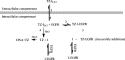
To circumvent problems associated with the reversibility of EGFR inhibitors, we recently designed a novel tumor targeting strategy termed “combi-targeting” that seeks to synthesize molecules designed to not only block EGFR TK on their own, but also to release an alkylating species capable of damaging DNA upon hydrolysis [8, 9 and 10]. This was expected to confer a cytotoxic function to these inhibitors. As outlined in Scheme 1, a molecule termed “combi-molecule” or TZ-I (see TZ-IEXT) is designed to penetrate cells by passive diffusion (path 1) and once inside the cells (see TZ-IINT), the molecules can either bind to EGFR (path 2) or degrade to generate a DNA damaging agent (TZ) and an inhibitor of EGFR (I) (path 4) [8 and 9]. TZ-I can also heterolyze at the receptor site to lead to a damaged receptor (see TZ-EGFR) and a free I that may further bind to nondamaged receptors as outlined in path 3. We have already shown that TZ-I could irreversibly block EGF-induced EGFR autophosphorylation in whole cells, suggesting that path 3 may also contribute to the EGFR inhibitory activities of the TZ-Is [10].1 The feasibility of molecules capable of acting through all the pathways proposed in Scheme 1 was primarily tested with the first prototype of combi-molecule termed “SMA41”, a quinazoline linked to an alkyltriazene (TZ-I) (see Scheme 2) that has been shown to bind to EGFR on its own and to release another inhibitor of EGFR (I)+a methyldiazonium species (TZ) in the human epidermal carcinoma of the vulva cell line A431 [8]. This combi-molecule was shown to possess the dual ability to induce a dose-dependent blockade of EGFR autophosphosphorylation in these cells and to damage DNA. The binary targeting effect of the combi-molecule translated into increased potency in cells resistant to temozolomide, a clinical triazene used in the therapy of brain tumors and malignant melanoma [11 and 12]. More importantly, SMA41 exhibited 3-fold greater potency than isoeffective combination of a reversible inhibitor of EGFR+temozolomide [8].
Display Full Size version of this image (5K) Scheme 1.
Display Full Size version of this image (3K) Scheme 2.
Despite an extensive demonstration of the potency of the combi-targeting strategy [8, 9 and 10], the mechanisms of fragmentation and subcellular distribution of the subcomponents of the combi-molecule remained elusive. Here we report on studies designed to characterize the two basic degradation products (e.g. TZ (methyldiazonium) +I (SMA52)) released from the TZ-I (SMA41) in the intracellular compartment and propose a model for their subcellular pharmacology. Fortuitously, the released TK inhibitor SMA52 (I) was found to fluoresce in the blue (449 nm), allowing its unequivocal detection by flow cytometry and UV fluorescence microscopy. The methyldiazonium species (TZ) being short-lived, it was characterized by 14C-labeling of the 3-methyl group of SMA41 and by analyzing its distribution in subcellular macromolecules.
2.1. Drug treatment
The chemical synthesis of 14C-SMA41 is reported elsewhere [13]. Temozolomide was provided by Shering-Plough Inc. In all assays, drug was dissolved in DMSO and subsequently diluted in sterile RPMI-1640 media containing 10% fetal bovine serum (Wisent) immediately prior to the treatment of cell cultures. In all assays, the concentration of DMSO never exceeded 0.2% (v/v).
2.2. Cell culture
The human tumor cell line A431 (ATCC), was maintained in RPMI-1640 supplemented with fetal bovine serum (10%), gentamycin (50 mg/mL) and HEPES (12.5 mM) (Wisent) in a monolayer culture at 37°. These cells were grown in a humidified environment of 5% CO2–95% air. They were maintained in logarithmic growth by harvesting with a trypsin-EDTA solution containing 0.5 mg/mL of trypsin and 0.2 mg/mL of EDTA (Wisent) and replating before confluence. In all assays, the cells were plated at least 24 hr before drug administration.
2.3. Emission spectra for SMA41 and SMA52
Emission–absorption spectra of SMA41 and SMA52 were taken in ethanol (70%) on a Perkin-Elmer scanning spectrofluorimeter at room temperature.
2.4. UV flow cytometry for fluorescence in whole cells
Cells were grown in 6-well plates until confluency and then either exposed to each compound (1 mM) for 0, 15, 30, and 60 min, or to a dose range of each compound for 2 hr at 37°. Following drug treatment, they were harvested with Trypsin-EDTA, collected by centrifugation, re-suspended in PBS, centrifuged and washed. Fluorescence intensity associated with single cells was quantitated using a Becton-Dickinson FACScan with an excitation wavelength of 250 nm.
2.5. UV fluorescence microscopy
Cells were plated on 2-well chamber slides (Nalge Nunc) in complete media, and allowed to grow until confluency. Following treatment with SMA41 or SMA52 at 37°, the media was removed and cells were washed with PBS. Thereafter, they were fixed with formaldehyde (3.7% formaldehyde in PBS; 1 mM MgCl2) for 30 min at room temperature. The slides were subsequently washed 3 times with PBS containing 1 mM MgCl2, and cover slips were added using the SlowFade Light Antifade kit (Molecular Probes). The slides were analyzed at an excitation wavelength of 340 nm.
2.6. Radiolabeling of isolated macromolecules by 14C-SMA41
Calf liver RNA, bovine serum albumin and calf thymus DNA (600 μg/mL) (Sigma) were exposed to 100 μM 14C-SMA41 (specific activity: 54.6 mCi/mmol) for 2 hr at 37° and pellets isolated as described by Bull and Tisdale [14]. For radioanalysis, a 150 μL sample was diluted with 1 mL distilled water and added to 9 mL Universol scintillation cocktail (ICN). Samples were read in a Wallac 1219 Rackbeta liquid scintillation counter.
2.7. Radiolabeling and isolation of macromolecules from A431 cells
A431 cells were grown in 6-well plates until confluency, and subsequently treated with 100 μCi 14C-SMA41 for 2 hr at 37°. Cells were collected, lysed in perchloric acid and the pellets prepared as per Bull and Tisdale [14]. Radioactivity associated with DNA, RNA and protein pellets was quantitated by liquid scintillation counting.
3.1. Fluorimetric analysis
As shown in Fig. 1, SMA52 fluoresces at 449 nm when excited at 280 nm. This indicates that light detected at 449 nm will have no interference with emission from SMA41. These properties permit an unequivocal detection of SMA52 with instruments such as UV fluorescence microscope and flow cytometer with a UV excitation source. Regrettably, SMA41 did not show exploitable fluorescence properties.
Display Full Size version of this image (8K) Fig. 1. Emission spectra for SMA52. SMA52 was found to have a peak emission of 449 nm when excited at 280 nm.
3.2. Flow cytometric analysis of SMA52 released form the hydrolysis SMA41
The feasibility of the fluorimetric analysis of SMA52 was tested with the high EGFR-expressing A431 cells in which binary DNA/EGFR targeting had first been demonstrated [8]. As depicted in Fig. 2a, autofluorescence from untreated A431 was set as background. Treatment of these cells with 1 mM SMA52 or SMA41 for 2 hr caused a significant increase in fluorescence intensity, indicating positive uptake of SMA52 by these cells (Fig. 2b and c). Approximately 2-fold higher fluorescence intensity was obtained when SMA41 was administered to these cells at the same concentration as free SMA52. Having successfully detected SMA52 by this flow cytometric approach, the experiments were further carried out with a dose range of each drug ( Fig. 3a). Saturation plots were observed with plateaus around 1–2 mM. More importantly, over the whole dose range, cells treated with SMA41 consistently showed approximately 2-fold higher fluorescent intensities than those directly exposed to SMA52 over the whole dose range, indicating that SMA41 perhaps behaves as an efficacious transporter prodrug of SMA52.
Display Full Size version of this image (8K) Fig. 2. FACS histograms illustrating the internalization of SMA41 by A431 cells. When cells are (a) untreated, their fluorescence is not detected upon UV excitation. If SMA52 (b) or SMA41 (c) are given for 2 hr at 1 mM concentration, there is a significant increase in intensity indicating increased concentrations of SMA52 in these cells.
Display Full Size version of this image (7K) Fig. 3. Internalization of SMA41 by A431 cells and its half-life within the cytosol. (a) SMA41 or SMA52 were given for 2 hr min in a concentration range of 0–2 mM and fluorescence was detected using flow cytometry. (b) SMA41 (1 mM) was given for 0, 15, 30, or 60 min, and fluorescence determined using flow cytometry at each time point. Each point represents an average of two experiments.
Flow cytometric analysis being based on the detection of fluorescence intensities/single cell, we designed a time course experiment to determine the rate of formation of SMA52 from the degradation of SMA41 in A431 cells. The results showed that SMA41 degraded in the cells with a half-life of 11 min, measured as the inverse of the rate of formation of SMA52 (Fig. 3b).
3.3. UV fluorescence microscopy of A431 cells exposed to SMA41 and SMA52
The successful detection of SMA52 directly exposed to or released from SMA52 by flow cytometry suggested that microscopic observation at the same wavelength would permit direct visual observation of the subcellular distribution of SMA52 in the cells. The analysis was performed at 125 μM, a concentration that was below saturation range (see Fig. 4). Due to the short half-life of SMA41, as indicated by Fig. 3b, we have chosen to perform microscopic observation at a short (1 min) and a long (1 hr) exposure time. Interestingly, at the short exposure time, cells directly exposed to SMA52 showed higher levels of uptake than those given SMA41, which is in agreement with the fact that the latter molecule requires hydrolysis to release SMA52. This is further confirmed by the almost identical levels of fluorescence observed for both sets of samples (e.g. SMA52 or SMA41-treated cells) at the longer 1-hr exposure time. Also, no significant difference was apparent in the levels of SMA52 whether it was exposed for 1 min or 1 hr, which is in agreement with its ability to fluoresce without any requirement for hydrolysis.
Display Full Size version of this image (47K) Fig. 4. Internalization of SMA41 and SMA52 by A431 cells. UV fluorescence microscopy was used to detect the released SMA52 in cells that were treated with SMA41 for either 1 min or 1 hr, and in cells that were treated with SMA52 for either 1 min or 1 hr (magnification: 250×).
More importantly, in both sets of samples, SMA52 was discretely distributed in the perinuclear region as indicated by significant fluorescence intensities observed around the nuclei.
3.4. Distribution of radioactivity in DNA, RNA and proteins
Prior to analyzing the distribution of the 3-[14C]-methyl group in cellular macromolecules, we studied the interactions of the labeled SMA41 with isolated macromolecules (e.g. DNA, RNA and protein). Following a 2-hr exposure, DNA, RNA, and protein were collected and analyzed by liquid scintillation counting. As shown in Fig. 5a, radioactivity was detected in all three macromolecules indicating that SMA41 is capable of alkylating nucleophilic groups attached to the backbone of each of these macromolecules. The experiment was further carried out in A431 cells, which were exposed to 14C-SMA41 for 2 hr, lysed, and processed for DNA, RNA and proteins. As shown in Fig. 5b, the distribution of radioactivity parallel that observed for isolated macromolecules with the exception that the highest levels of counts were observed in proteins. This is in agreement with the superior protein content of whole cells when compared with RNA or DNA.
Display Full Size version of this image (8K) Fig. 5. Distribution of radioactivity in macromolecules exposed to 14C-SMA41. Either (a) isolated macromolecules or (b) whole cells were exposed to 14C-SMA41 for 2 hr, after which DNA, RNA and protein were isolated and radioactivity was determined using liquid scintillation counting.
4. Discussion
The “combi-triazene” SMA41 is a chimeric and unimolecular combination of two pharmacophores associated with two major mechanisms of action: a 4-anilinoquinazoline that defines its ability to inhibit EGFR-mediated cell signaling, and a 3-methyl-1,2,3-triazene that masks its DNA alkylating methyldiazonium metabolite [8]. The hydrolytic cleavage of the alkyltriazene has been shown to further lead to the formation of an aromatic amine SMA52, a reversible inhibitor of EGFR and the methyldiazonium species directed at DNA. SMA41 blocked EGFR autophosphorylation in a dose-dependent manner and induced superior antiproliferative activities when compared with temozolomide or SMA52 in cells overexpressing EGFR [9]. While the binary biological effects of SMA41 (EGFR inhibition and DNA damage) have now been demonstrated, the subcellular distribution of its bioactive degradation products remained undetermined. The current report provides the first ever reported evidence of the subcellular fragmentation of a combi-triazene.
We have previously reported that SMA41 degrades in cell culture medium with a half-life of 34 min to an almost stoichiometric yield of SMA52 as determined by HPLC and LC-MS. Unlike the decomposition of SMA41 in cell-free medium, the rate of intracellular degradation of SMA41 involves a diffusion step. Thus, it is interesting to note that despite the requirement for a two-step mechanism, the observed rate of intracellular release of SMA52 was relatively short when compared with its kinetics of formation in cell-free medium. The rather rapid intracellular decomposition of SMA41 may perhaps be due to the abundance of intracellular enzymes and perhaps to a slightly acidic environment [15]. It is now common knowledge that monoalkyltriazenes are extremely acid sensitive [16].
Moreover, the superior levels of SMA52 observed in cells previously treated with SMA41 when compared with those directly exposed to SMA52 is a striking observation that outlines a transport advantage for the combi-molecular approach. Indeed SMA41 being more lipophilic (log PSMA41=4.48; log PSMA52=3.90; calculated using the ChemDraw Ultra software package), may be rapidly transported across the lipid bi-layer and its rapid intracellular degradation may decrease its efflux. More importantly, the released SMA52 appears to be trapped in the perinuclear region, a process that dramatically decreases the rate of efflux of the latter. The perinuclear localization of SMA52 may be due to the binding of the latter to nascent EGFR or related proteins and unspecific binding to other intracellular proteins. It is noteworthy that SMA52 despite being a polar amine can also penetrate the cells and be distributed in the perinuclear region when administered directly. This indicates that in the event that a fraction of SMA41 degrades extracellularly, the released SMA52 will also be ultimately transported into the cells.
Following successful localization of SMA52, we analyzed the distribution of the DNA damaging species. SMA41 being labeled at the 3-methyl group, all detected radioactivity is associated with methylated protein, RNA and DNA adducts. Furthermore, since the cellular uptake of the methyldiazonium species released extracellularly will be limited by its instability and its ionic character, the radioactivity detected in intracellular macromolecules may be largely derived from internalized SMA41. As previously reported for 14C-labeled temozolomide [14], the lead compound of the triazene class, the labeled methyl group is distributed through all three macromolecules with a larger distribution in proteins when compared with nucleic acids. It is now accepted that although triazenes alkylates all three molecules, the true cytotoxic lesions are those inflicted to DNA. The effects of those incurred by RNA or proteins are considered minimal. This conclusion is primarily corroborated by high levels of chemoresistance of tumor cells expressing O6-alkylguanine transferase, a DNA repair enzymes capable of specifically repairing the O6-methylguanine adduct [17, 18 and 19].
Thus, this study in the high EGFR-expressing A431 cells have confirmed the subcellular localization of the binary component of SMA41 and allowed us to verify our primary postulates outlined in Scheme 1. We are now able to propose a model for the transport and distribution of the combi-molecule or the TZ-I. As depicted in Scheme 3, while the absence of fluorescence from SMA41 did not permit the tracing of its localization, the results in toto give a significant insight into the distribution of its degradation products. The model suggests that: (a) SMA41 may diffuse into the cells and once inside the cells, it rapidly decomposes to give SMA52 that is trapped in the perinuclear region, (b) fractions of SMA41 that degrade extracellularly may release SMA52 that in contrast to the charged and short-lived methyldiazonium, is capable of entering the cells, (c) in contrast to SMA52 that exhibits discrete subcellular distribution, the methyldiazonium diffuses to all organelles where it reacts with nucleophilic groups of protein, RNA, and nuclear DNA.
Display Full Size version of this image (43K) Scheme 3.
This study conclusively demonstrated that SMA41 is an effective carrier or
prodrug of SMA52, a metabolite that it can selectively deliver to the
perinuclear region of A431 cells. More importantly, the results discussed herein
strongly support the primary postulates of the combi-targeting theory that seeks
to develop molecules termed combi-molecule or TZ-I with affinity for EGFR and
with ability to degrade to another inhibitor (I) of the same target+a DNA
damaging species (TZ). Further studies are ongoing in our laboratory to engineer
a large panel of cells with ectopic expression of EGFR, HER2 and PDGFR and
insulin in order to assess the receptor dependence of SMA52 distribution and
extent of DNA damage in epithelial cancer cells.
Acknowledgements
We thank the Canadian Institutes for Health Research and the Cancer Research Society Inc. for financial support. S.L.M. is grateful to the McGill Faculty of Medicine for a graduate scholarship. We also thank Mme. Anne Marcil at the Biotechnology Research Institute of the National Research Council for her assistance with fluorescence microscopy and Xiaoming Fu for fluorescence scanning analysis.
References
1. J.-L. Chou, Z. Fan, T. DeBlasio, A. Koff and N. Rosen, Constitutive overexpression of cyclin D1 in human breast epithelial cells does not prevent G1 arrest by deprivation of epidermal growth factor. Breast Cancer Res. Treat 55 (1999), pp. 267–283. Full Text via CrossRef | View Record in Scopus | Cited By in Scopus (27)
2. R.F. Sherwood, J.L. Van Dongen, C.G. Wood, S. Liao, J.M. Kozlowski and C. Lee, Epidermal growth factor receptor activation in androgen-independent but not androgen-dependent growth of human prostate carcinoma cells. Br. J. Cancer 77 (1999), pp. 855–861.
3. J. Albanell, J. Codony-Servat, F. Rojo, J.M. Del Campo, S. Sauleda, J. Anido, G. Raspall, J. Giralt, J. Rosello, R.I. Nicholson, J. Mendelsohn and J. Baselga, Activated extracellular signal-related kinases: association with epidermal growth factor receptor/transforming growth factor-α expression in head and neck squamous carcinoma and inhibition by anti-epidermal growth factor receptor treatments. Cancer Res. 61 (2001), pp. 6500–6510. View Record in Scopus | Cited By in Scopus (155)
4. J. Baselga, New therapeutic agents targeting the epidermal growth factor receptor. J. Clin. Oncol. 18 (2000), pp. 54s–59s.
5. J. Baselga, D. Rischin, M. Ranson, A.H. Calvert, E. Raymond, D.G. Kieback, S.B. Kaye, L. Gianni, A. Harris, T. Bjork, S.D. Averbuch, A. Feyereislova, H. Swaisland, F. Rojo and J. Albanell, Phase I safety, pharmacokinetic, and pharmacodynamic trial of ZD1839, a selective oral epidermal growth factor receptor tyrosine kinase inhibitor, in patients with five selected solid tumor types. J. Clin. Oncol. 20 (2002), pp. 4292–4302. Full Text via CrossRef | View Record in Scopus | Cited By in Scopus (385)
6. D.W. Fry, A.J. Kraker, A. McMichael, L.A. Ambroso, J.M. Nelson, W.R. Leopold, R.W. Conners and A.J. Bridges, A specific inhibitor of the epidermal growth factor receptor tyrosine kinase. Science 265 (1994), pp. 1093–1095. View Record in Scopus | Cited By in Scopus (479)
7. G.W. Rewcastle, W.A. Denny, A.J. Bridges, H. Zhou, D.R. Cody, A. McMichael and D.W. Fry, Tyrosine kinase inhibitors. 5. Synthesis and structure-activity relationships for 4-[(phenylmethyl)amino]- and 4-(phenylamino)quinazolines as potent adenosine 5′-triphosphate binding site inhibitors of the tyrosine kinase domain of the epidermal growth factor receptor. J. Med. Chem. 38 (1995), pp. 3482–3487. Full Text via CrossRef | View Record in Scopus | Cited By in Scopus (125)
8. S.L. Matheson, J.P. McNamee and B.J. Jean-Claude, Design of a chimeric 3-methyl-1,2,3-triazene with mixed receptor tyrosine kinase and DNA damaging properties: a novel tumor targeting strategy. J. Pharmacol. Exp. Ther. 296 (2001), pp. 832–840. View Record in Scopus | Cited By in Scopus (29)
9. S.L. Matheson, J.P. McNamee and B.J. Jean-Claude, Differential responses of EGFR/AGT-expressing cells to the “combi-triazene” SMA41. Cancer Chemother. Pharmacol. 51 (2003), pp. 11–20. Full Text via CrossRef | View Record in Scopus | Cited By in Scopus (19)
10. F. Brahimi, S.L. Matheson, F. Dudouit, J.P. McNamee, A.M. Tari and B.J. Jean-Claude, Inhibition of epidermal growth factor receptor-mediated signaling by “combi-triazene” BJ2000, a new probe for combi-targeting postulates. J. Pharmacol. Exp. Ther. 303 (2002), pp. 238–246. Full Text via CrossRef | View Record in Scopus | Cited By in Scopus (22)
11. H.W. Manning, L.M. Cameron, R.J. LaFrance, K. Vaughan and G. Ramirez, Triazene metabolism. V. Chemical and biological properties of N,B-bis-[1-aryl-3-methyltriazen-3-yl-methyl]-methylamines: potential prodrugs for the cytotoxic monomethyltriazenes. Anticancer Drug Des. 1 (1985), pp. 37–41.
12. E.S. Newlands, M.F.G. Stevens, S.R. Wedge, R.T. Wheelhouse and C. Brock, Temozolomide: a review of its discovery, chemical properties, pre-clinical development and clinical trials. Cancer Treat Rev. 23 (1997), pp. 35–61. SummaryPlus | Full Text + Links | PDF (6185 K) | View Record in Scopus | Cited By in Scopus (201)
13. S.L. Matheson, S. Mzengeza and B.J. Jean-Claude, Synthesis of a 1-[4-(m-tolyl)amino-6-quinazolinyl-3-[14C]-methyl] triazene: a radiolabeled probe for the combi-targeting concept. J. Labelled Compd. Radiopharm. 46 (2003), pp. 729–735. Full Text via CrossRef | View Record in Scopus | Cited By in Scopus (8)
14. V.L. Bull and M.J. Tisdale, Antitumour imiazotetrazines-XVI macromolecular alkylation by 3-substituted imidazotetrazinones. Biochem. Pharmacol. 36 (1987), pp. 3215–3220. Abstract | Abstract + References | PDF (636 K) | View Record in Scopus | Cited By in Scopus (8)
15. B.G. Winchester, Lysosomal membrane proteins. Eur. J. Paediatr. Neurol. 5 Suppl. A (2001), pp. 11–19. Abstract | PDF (1212 K) | View Record in Scopus | Cited By in Scopus (17)
16. M.F.G. Stevens and E.S. Newlands, From triazines and triazenes to temozolomide. Eur. J. Cancer 29 (1993), pp. 1045–1047. Abstract | PDF (333 K) | View Record in Scopus | Cited By in Scopus (29)
17. M.J. Tisdale, Role of guanine O6 alkylation in the mechanism of cytotoxicity of imidazotetrazinones. Biochem. Pharmacol. 36 (1987), pp. 457–462. Abstract | Abstract + References | PDF (648 K) | View Record in Scopus | Cited By in Scopus (38)
18. M. Bignami, M. O’Driscoll, G. Aquilina and P. Karran, Unmasking a killer: DNA O6-methylguanine and the cytotoxicity of methylating agents. Mut. Res. 462 (2000), pp. 71–82. SummaryPlus | Full Text + Links | PDF (228 K) | View Record in Scopus | Cited By in Scopus (71)
19.
H. Lage, M. Christmann, M. Kern, M. Deitel, M. Pick, B. Kaina and D.
Schadendorf, Expression of DNA repair proteins hMSH2, hMSH6, hMLH1,
O6-methylguanine-DNA methyltransferase and N-methylpurine-DNA glycosylase in
melanoma cells with acquired drug resistance. Int. J. Cancer
80 (1999), pp. 744–750. Full Text via CrossRef | View Record in Scopus | Cited By in Scopus (41)
1 Matheson SL, McNamee, JP, Wang T, Alaoui-Jamali MA, Tari AM, Jean-Claude BJ. The combi-targeting concept: a dissection of the binary mechanism of action of the combi-triazene SMA41 in vitro and its antiproliferative effects in vivo. Clin Cancer Res, submitted.
| Biochemical
Pharmacology Volume 67, Issue 6, 15 March 2004, Pages 1131-1138 |
|
|
 |







.gif "Display Full Size version of this image (3K) - Opens new window")
.gif "Display Full Size version of this image (8K) - Opens new window")
.gif "Display Full Size version of this image (8K) - Opens new window")
.gif "Display Full Size version of this image (7K) - Opens new window")
.gif "Display Full Size version of this image (47K) - Opens new window")
.gif "Display Full Size version of this image (8K) - Opens new window")
.gif "Display Full Size version of this image (43K) - Opens new window")
